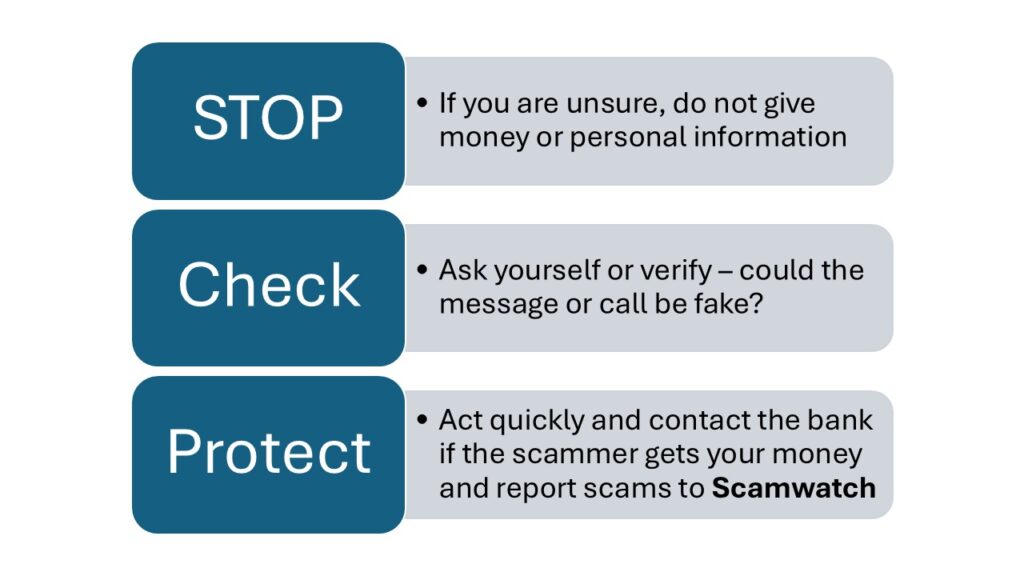
How to identify a scam

What is a scam?

A scam is when someone tricks you into providing personal or financial information so they can steal from you.

Scams are the most common way individuals are targeted by cybercriminals, so it’s important to stay vigilant and know the warning signs. Below are some warning signs to watch for:

Scammers trick you into believing you’re getting an incredible deal or offer. They pressure you to act quickly so you don’t miss out. Remember, deals that seem too good to be true, usually are.

Scammers try to use your good nature against you. They tell heartbreaking or tragic stories to convince you to help them and give them money. Always be wary of any appeal for money and never give more money than you are willing to lose if you can’t independently confirm that the story is true.

Never automatically click a link or attachment you receive via email or text. Scammers try to catch you off guard and send you to scam websites designed to steal your information and money.

Always make sure that the sender is who they say they are and that you know what you are opening. It’s safest to find the information yourself by browsing to the website or app rather than clicking on a link.

Scammers don’t want you to take your time to think things through. They use techniques designed to catch you off guard and rush you, either saying if you don’t you’ll miss out or threatening that something bad will happen.

If a person asks you to pay with preloaded debit cards, iTunes cards, mail or virtual currency like Bitcoin, chances are it’s a scam. Once this money is spent, you can’t get it back.

If someone asks you to set up a new bank account or PayID in order to pay them (or be paid by them), this is a clear sign you should be suspicious. It could be a scam, or money laundering. Your bank will never ask you to open new accounts to keep your money safe. Stop and check who you are dealing with.

Watch out for follow-up scams

  • If scammers have been successful, they will try to get more money.
  • Unfortunately, one in three victims of a scam have been scammed more than once.
  • If scammers have stolen your money, financial or personal information, watch out for new scams – especially if someone contacts you to ‘help you get your money back’.

What to do?

Here you can explore additional educational resources and practical tools to help you stay safe and protect yourself from scams.

Translations:

Leave a Comment

Your email address will not be published. Required fields are marked *